The Line at Olympia
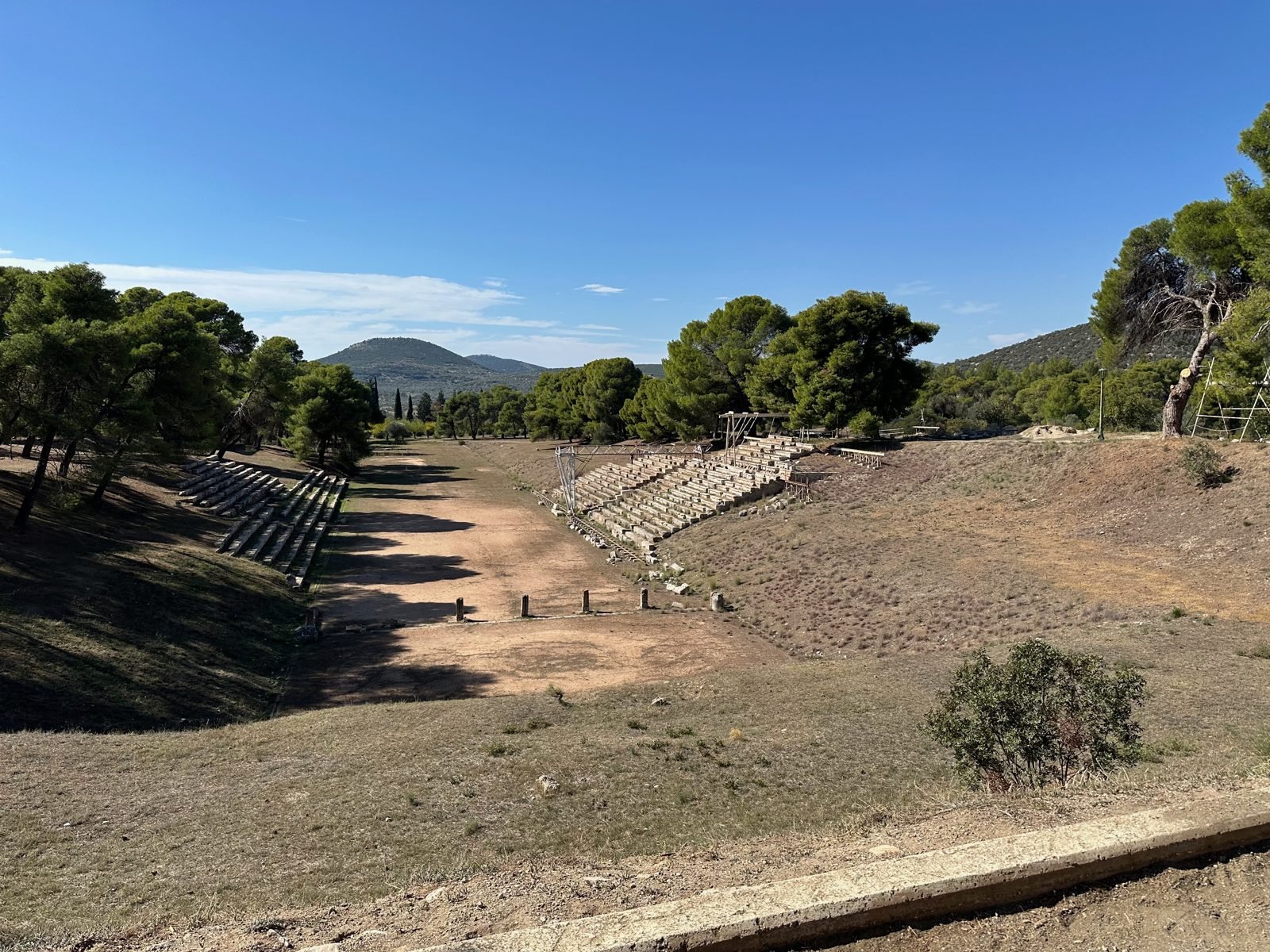
Cut into a slab of white marble at Olympia is a row of shallow grooves, just wide enough for a man's bare toes. The first runner whose name we still know wedged his feet into them and listened for a trumpet. He was a cook from Elis named Koroibos, and in 776 BC he ran one short race and won. History remembers the baker's name — and forgot the kings who sat watching.
Key Terms
- Koroibos
- A cook and baker from Elis who stepped to the marble starting line in 776 BC and became the first Olympic champion on record.
- Stadion
- The original Olympic footrace, about 192 meters; also the root of our word stadium.
- Balbis
- The marble sill cut with shallow toe-grooves where runners set their bare feet before the trumpet sounded.
- Arete
- Excellence; being the very best at what you do.
- Kleos
- Immortal glory or fame, earned by great deeds and remembered long after you die.
- Hubris
- Dangerous, overreaching pride that ignores limits and brings ruin.
- Polis
- An independent Greek city-state: an urban center plus its farmland, run by its own citizens, with its own laws and army.
- Hellas
- The name the Greeks gave their shared culture: one language, one set of gods, one set of heroes — even though they were never one country.
- Panhellenic
- "All-Greek"; sacred sites and festivals (like Olympia) where every polis could gather safely under a holy truce.
- Pindus
- The great spine of mountains running down the center of the Greek peninsula, splitting valley from valley.
- Homer
- The poet tradition remembers as blind, credited with shaping the Iliad and the Odyssey.
- Troy
- The Bronze Age city on the coast of modern Turkey that a Greek fleet crossed the sea to besiege.
- Helots
- The conquered people of Messenia, forced to farm for their Spartan masters and outnumbering them seven to one.
- Solon
- The Athenian lawgiver who canceled the debts that were turning poor citizens into slaves, in 594 BC.
- Diolkos
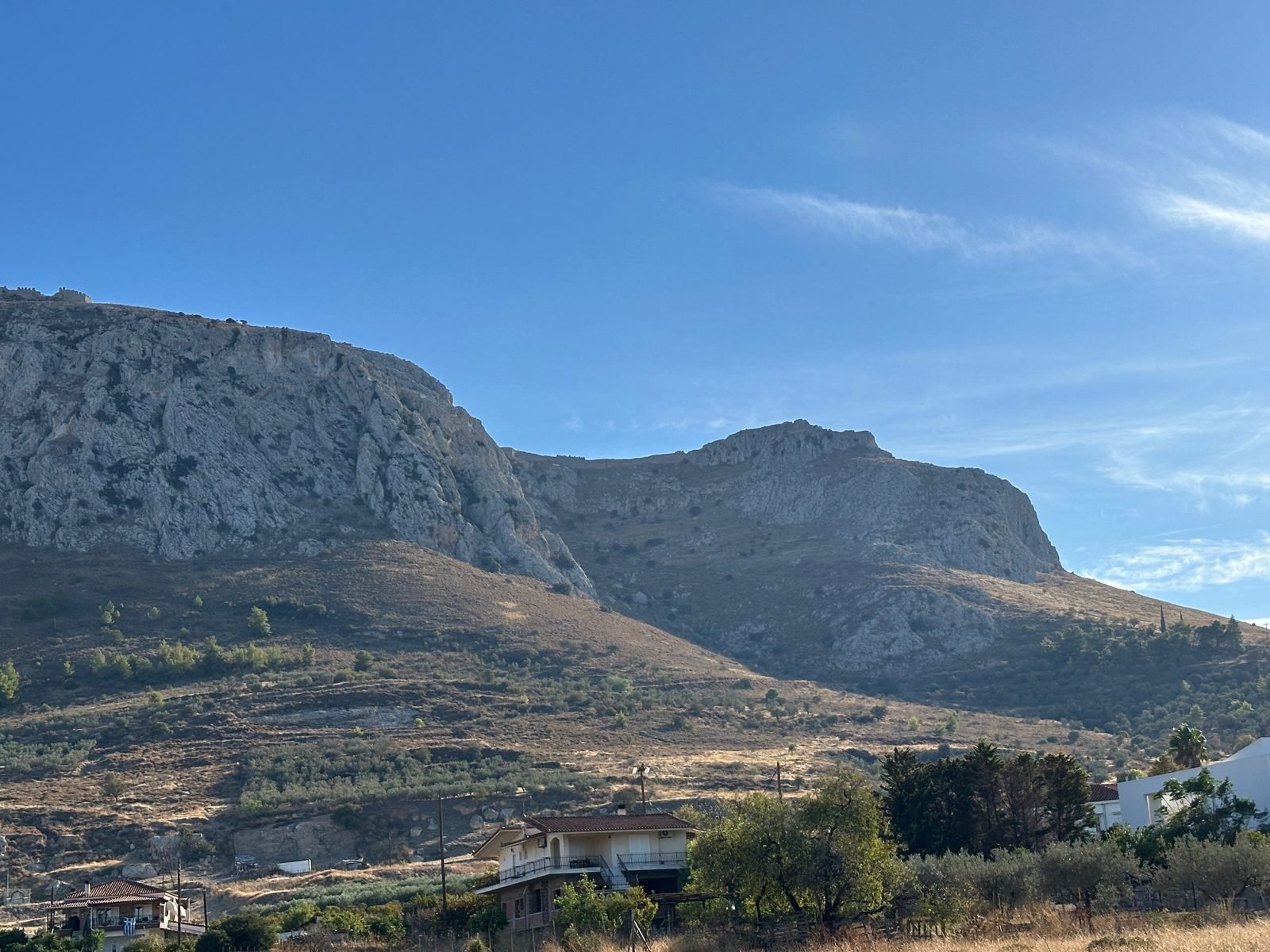
- The paved stone trackway at Corinth used to drag entire ships across nearly five miles of dry land.
- Delphi
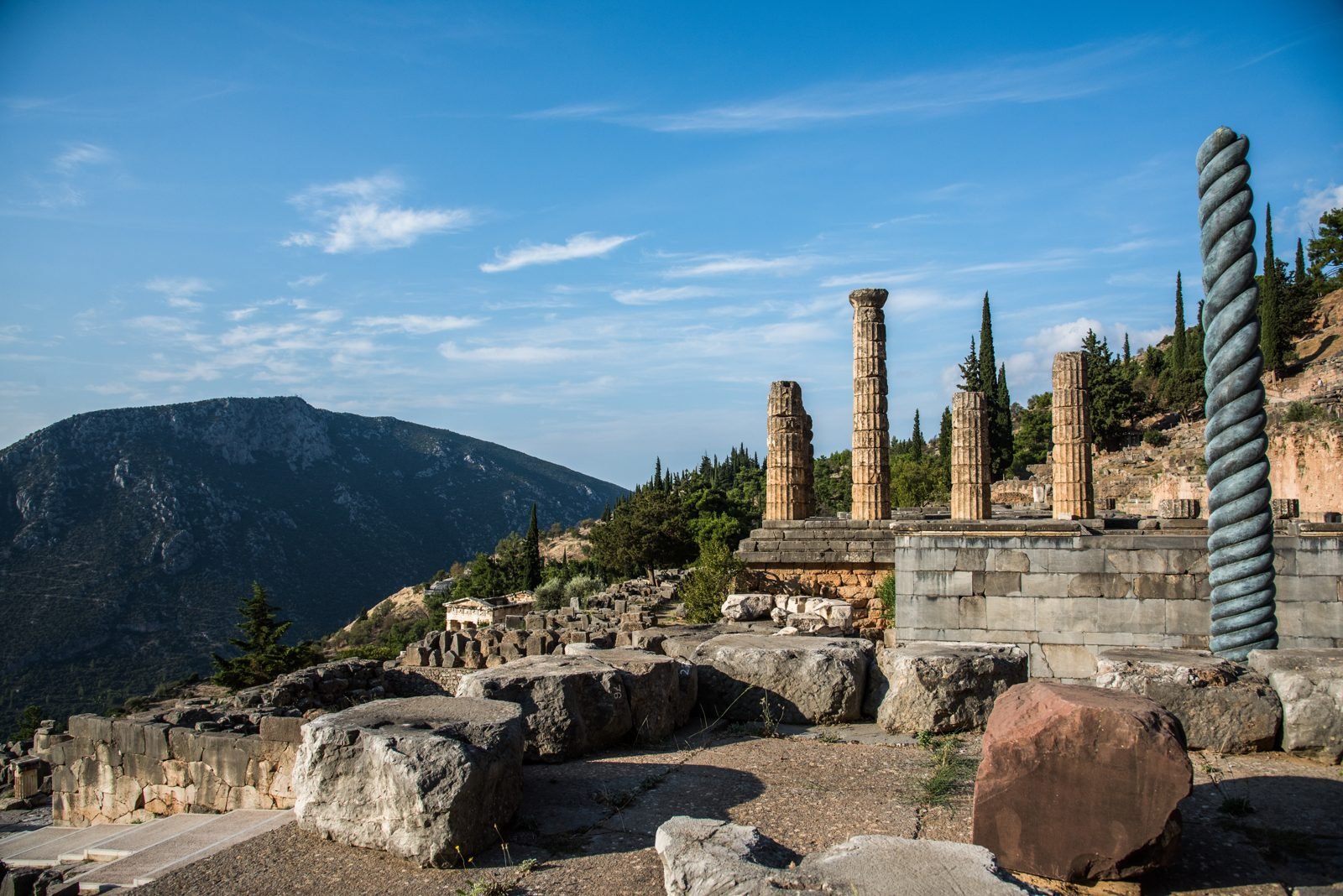
- The sacred site on the slopes of Mount Parnassos where a priestess spoke the god Apollo’s answers.
- Pythia
- The priestess who breathed sweet fumes rising from a crack in the rock and fell into a trance to speak for a god.
- Sacred Truce
- A sworn promise that paused every war in Greece for the length of the festival games.
- Olympia
- The quiet green valley where, every four years, Greeks gathered to learn who was strongest and fastest.
- Andreia
- The Greek virtue of courage — the willingness to face real risk for the sake of something worth winning.
From the Lesson 7 Visual Atlas